เรื่องน่ารู้ เกี่ยวกับฟันปลอมชนิดถอดได้!
เมื่อกล่าวถึงฟันปลอมอย่างง่าย ที่ทำง่ายที่สุด ในเวลาอันรวดเร็ว ราคาไม่แพงมากจนจับต้องได้ยาก ก็คงจะเป็นงานฟันปลอมชนิดถอดได้ ซึ่งมีหลายชนิดให้ท่านได้เลือก วันนี้ผู้เขียนจะพาท่านมารู้จักฟันปลอมถอดได้แต่ละชนิด แนะนำส่วนประกอบของฟันปลอม รวมไปถึงข้อดี ข้อเสียและข้อควรระวังการใช้งาน เพื่อให้ท่านพิจารณาก่อนการตัดสินใจรักษา ได้อย่างเหมาะสมกับจริตของท่าน
ก่อนอื่น มาทำความรู้จักฟันปลอมถอดได้กันก่อน ฟันปลอมถอดได้ ก็คือฟันปลอมที่สามารถใส่เข้าและถอดออกจากช่องปาก ด้วยตัวของคนไข้เอง ข้อดีก็คือคนไข้สามารถถอดมาล้างทำความสะอาดได้ง่าย ราคาไม่สูงมาก ซ่อมแซมง่ายเมื่อแตกหักเสียหาย ชิ้นงานสวยงาม มีส่วนที่ใช้ทดแทนเหงือก หรือกระดูกที่ยุบหายไปจากการถอนฟัน ส่วนข้อเสียของงานฟันปลอมถอดได้ เช่น มักจะมีฐานฟันปลอมที่แผ่ขยายไปวางบนเพดาน หรือสันเหงือก ทำให้คนไข้รู้สึกรำคาญได้ ปัญหาการออกเสียง เนื่องจากขนาดฟันปลอมที่ใหญ่ ความรู้สึกที่ไม่เป็นธรรมชาติขณะสวมใส่ และใช้การปรับตัวในการใช้งานที่ยาวนาน
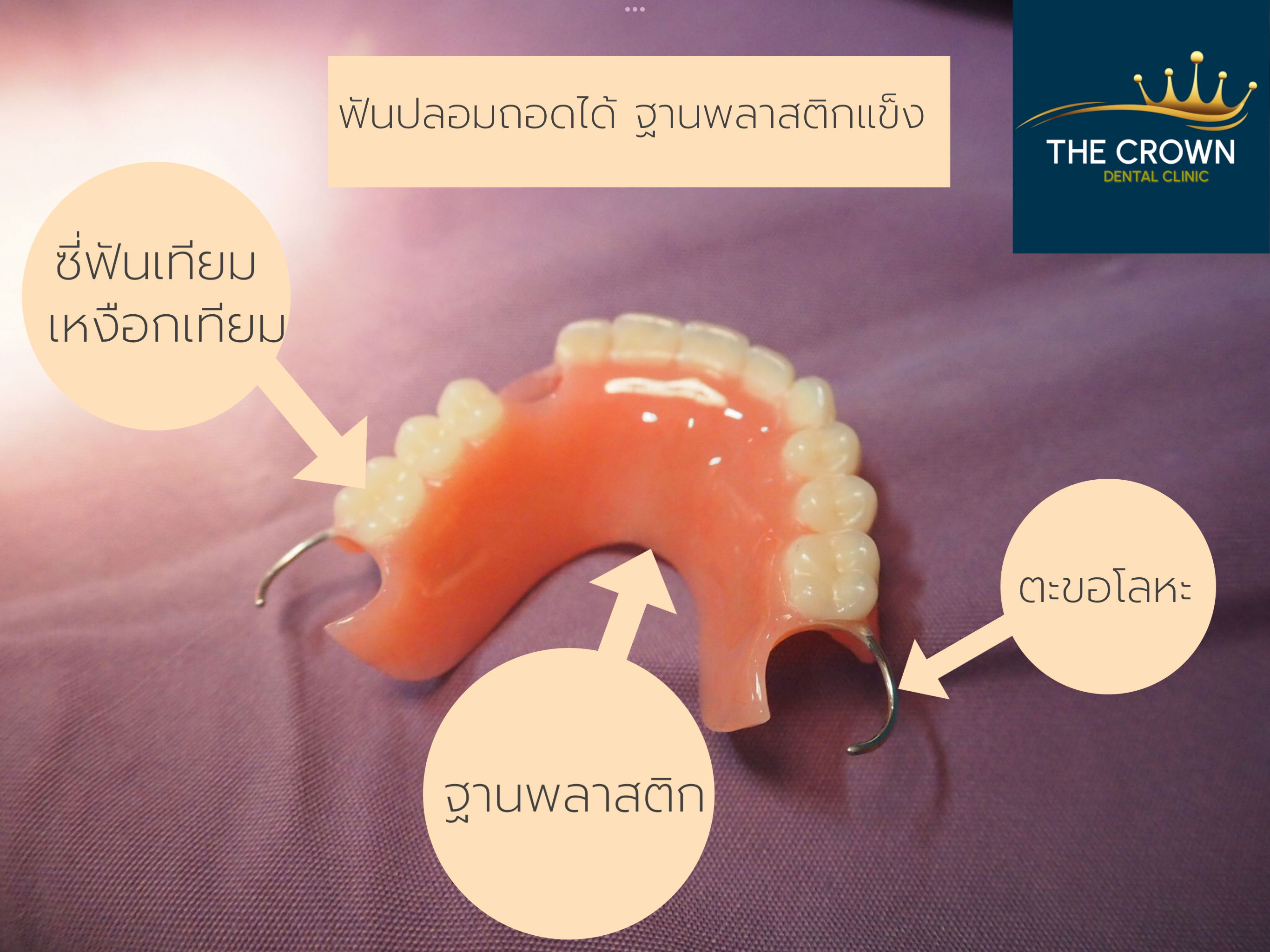
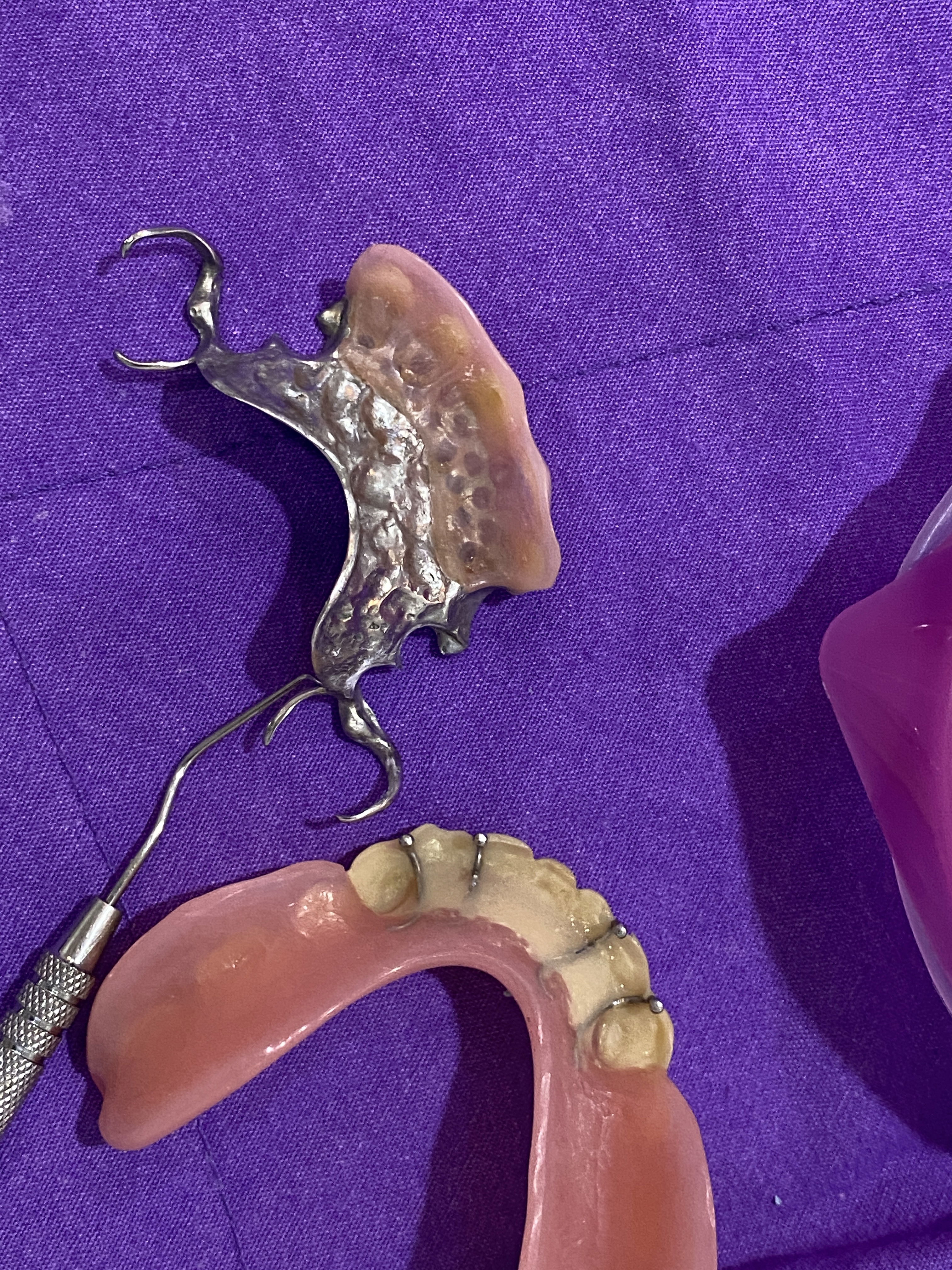
ฟันปลอมชนิดแรกเป็นฟันปลอมถอดได้ที่เบสิคที่สุด เรียกว่า ฟันปลอมถอดได้ฐานพลาสติกแข็ง มีขั้นตอนการทำไม่ยุ่งยาก มีรูปลักษณืที่สวยงามเพราะไม่มีส่วนของโลหะให้เห็นมาก แต่มักมีความหนา 2 มิลลิเมตร เพื่อให้ได้ความแข็งแรงของพลาสติก มีส่วนตะขอที่ใช้เกาะฟันหลักที่เป็นโลหะ ราคาถูกที่สุดในกลุ่มฟันปลอมถอดได้ ตกแตกได้ง่าย แต่ก็สามารถซ่อมแซมหรือเติมซี่ฟันใหม่ได้ง่าย เนื้อของพลาสติกมีความพรุน และมีคุณสมบัติการดูดสีและกลิ่นของอาหาร ส่งผลต่อการเปลี่ยนสีของวัสดุและความสกปรกง่าย ดังนั้นอายุการใช้งานประมาณ 5 ปี
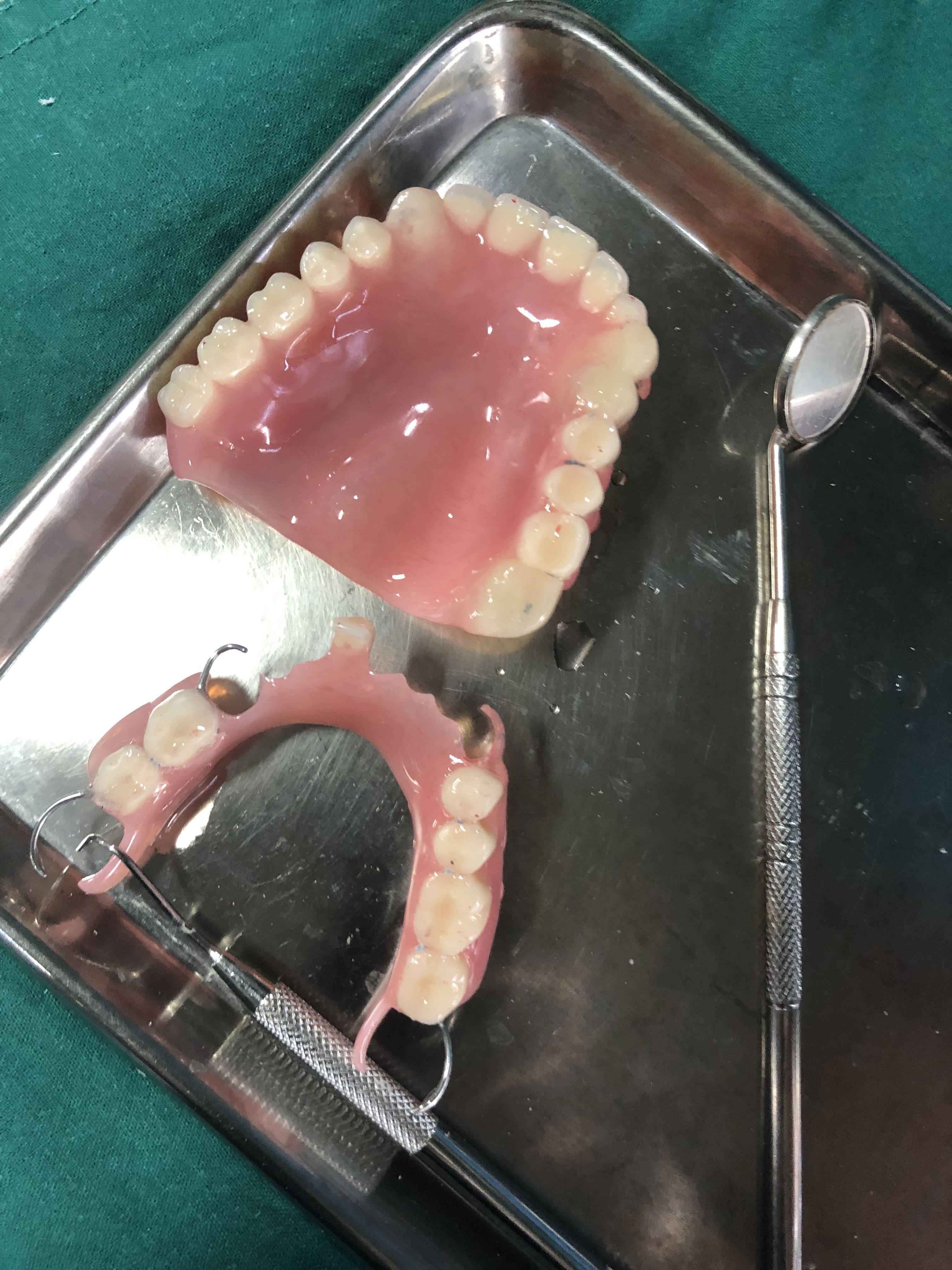
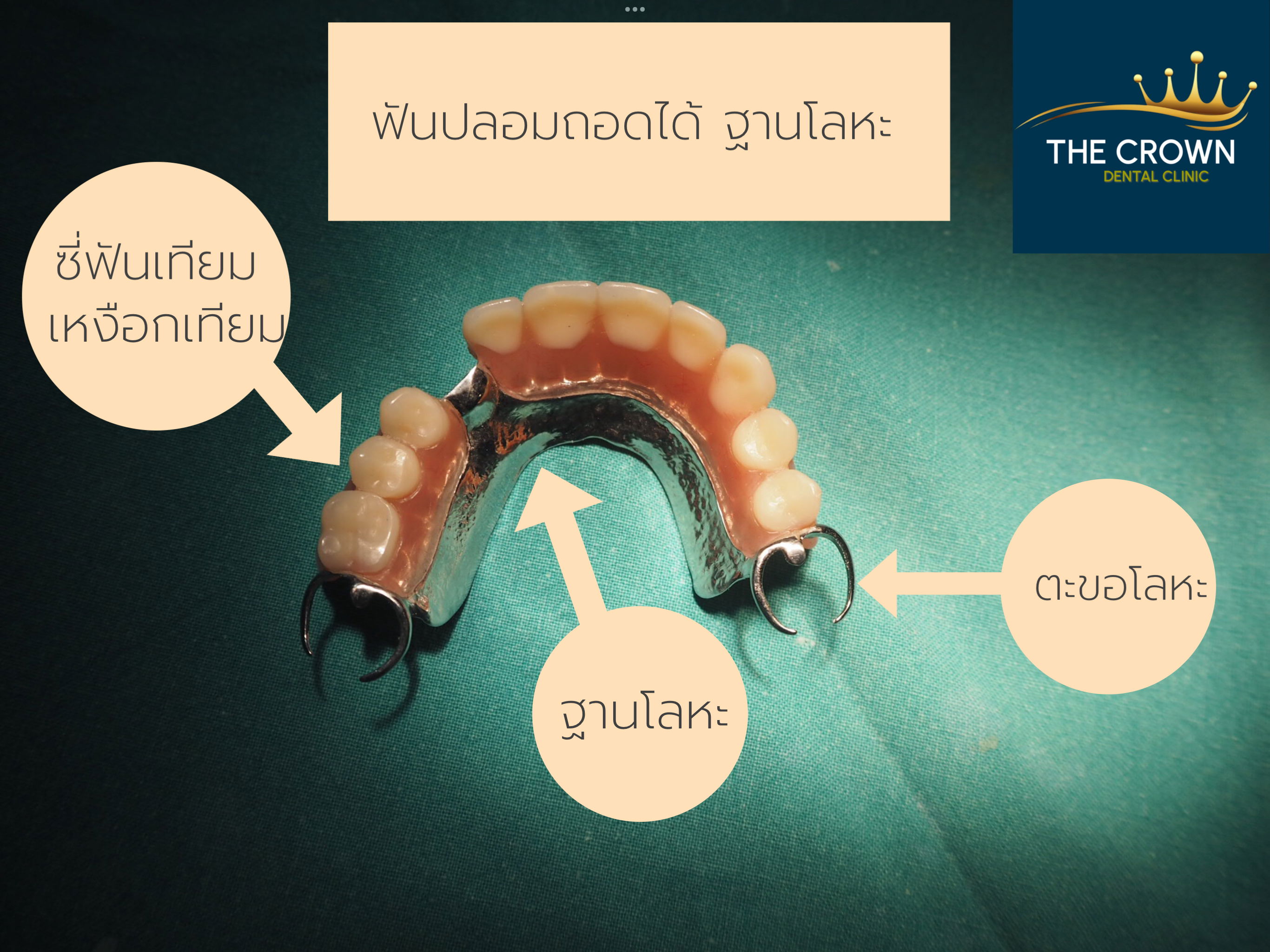
ฟันปลอมถอดได้ฐานโลหะ ชนิดนี้จะมีส่วนฐานและส่วนของตะขอ ส่วนพักตะขอ เป็นโลหะที่ถูกเหวี่ยงขึ้นมาทั้งชิ้น (เป็นชิ้นเดียวกัน) แต่ส่วนของเหงือกเทียมและซี่ฟัน ยังคงเป็นพลาสติกเพื่อคงความสวยงามให้กับฟันปลอม ส่วนของโลหะจะถูกซ่อนอยู่ในช่องปาก แน่นอนครับว่าความเป็นโลหะก็จะถูกทำให้บางที่สุดเท่าที่จะคงความแข็งแรงของฟันปลอมไว้ได้ ตะขอที่เหวี่ยงได้ถูกออกแบบโดยคุณหมอ ซึ่งต้องพิจารณาตำแหน่งที่เหมาะสม เพื่อให้ได้ความแนบมากที่สุด ดังนั้นฟันปลอมถอดได้ฐานโลหะ มีการกระจายแรงจากการบดเคี้ยวไปสู่สันเหงือกได้เหมาะสม
แต่ก็มีราคาที่ค่อนข้างสูง การซ่อมแซมทำได้ยาก เพราะต้องอาศัยเทคนิคการยึดติดระหว่างพลาสติกและโลหะ แต่เนื่องจากส่วนของโลหะสามารถทำความสะอาดได้ดี อายุการใช้งานจึงยาวนานมากกว่า 5 ปี แต่ก็มีส่วนของพลาสติกที่เป็นเหงือกเทียมและซี่ฟันที่สามารถแตกหัก และสึกได้จากการใช้งานเช่นกัน และในคนไข้บางรายยังมีคำบ่นในเรื่องของน้ำหนักของชิ้นงานอีกด้วย
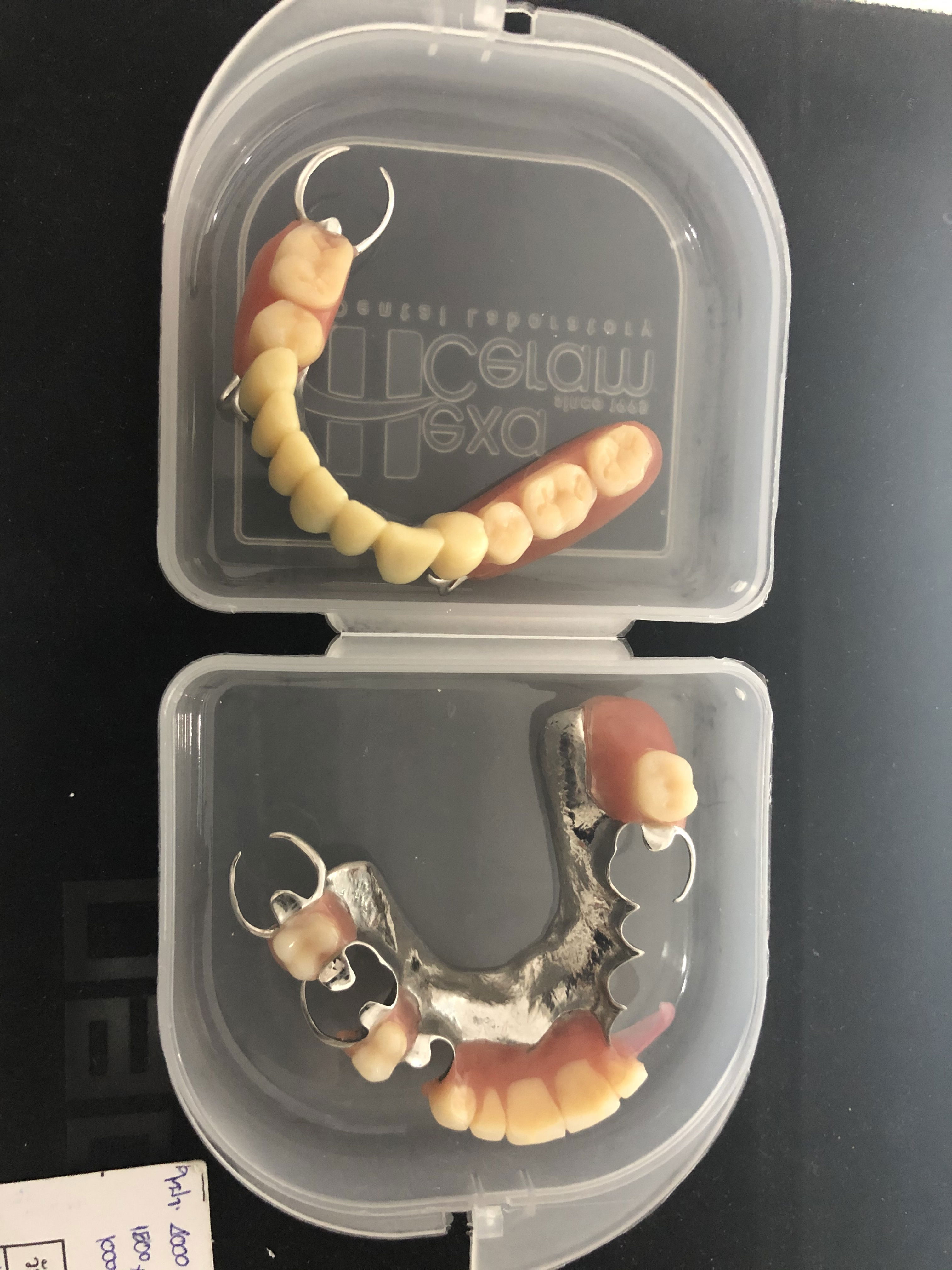
ฟันปลอมถอดได้ชนิดสุดท้ายที่คุณหมอมักจะเลือกใช้ ได้แก่ ฟันปลอมถอดได้ฐานพลาสติกนิ่ม ที่มีชื่อเรียกว่า Valplast (วอลพลาสต์) ฟันปลอมชนิดนี้. ดดยส่วนตัวของคุณหมอ มักแนะนำให้คนไข้ใส่ในกรณีทดแทนฟันหน้า เนื่องจากชิ้นค่อนข้างเล็ก น้ำหนักเบา ไม่มีส่วนของฐานรบกวนการใช้งาน
ส่วนการนำวอลพลาสต์ มาใช้ในการบูรณะฟันหลัง คุณหมอมีความเห็นว่า ไม่เหมาะสม เนื่องจากไม่มีส่วนของตะขอพักบนตัวฟัน ทำให้ถ้าหากนำไปบูรณะฟันหลังเพื่อใช้เคี้ยวอาหาร การกระจายแรงในการบดเคี้ยวไปยังเหงือกไม่ค่อยดี ซึ่งถึงแม้ว่าพลาสติกฐานนิ่ม จะทำให้การสวมใส่ฟันปลอมนั้นง่าย เบาสบาย และไม่หนักก็ตาม
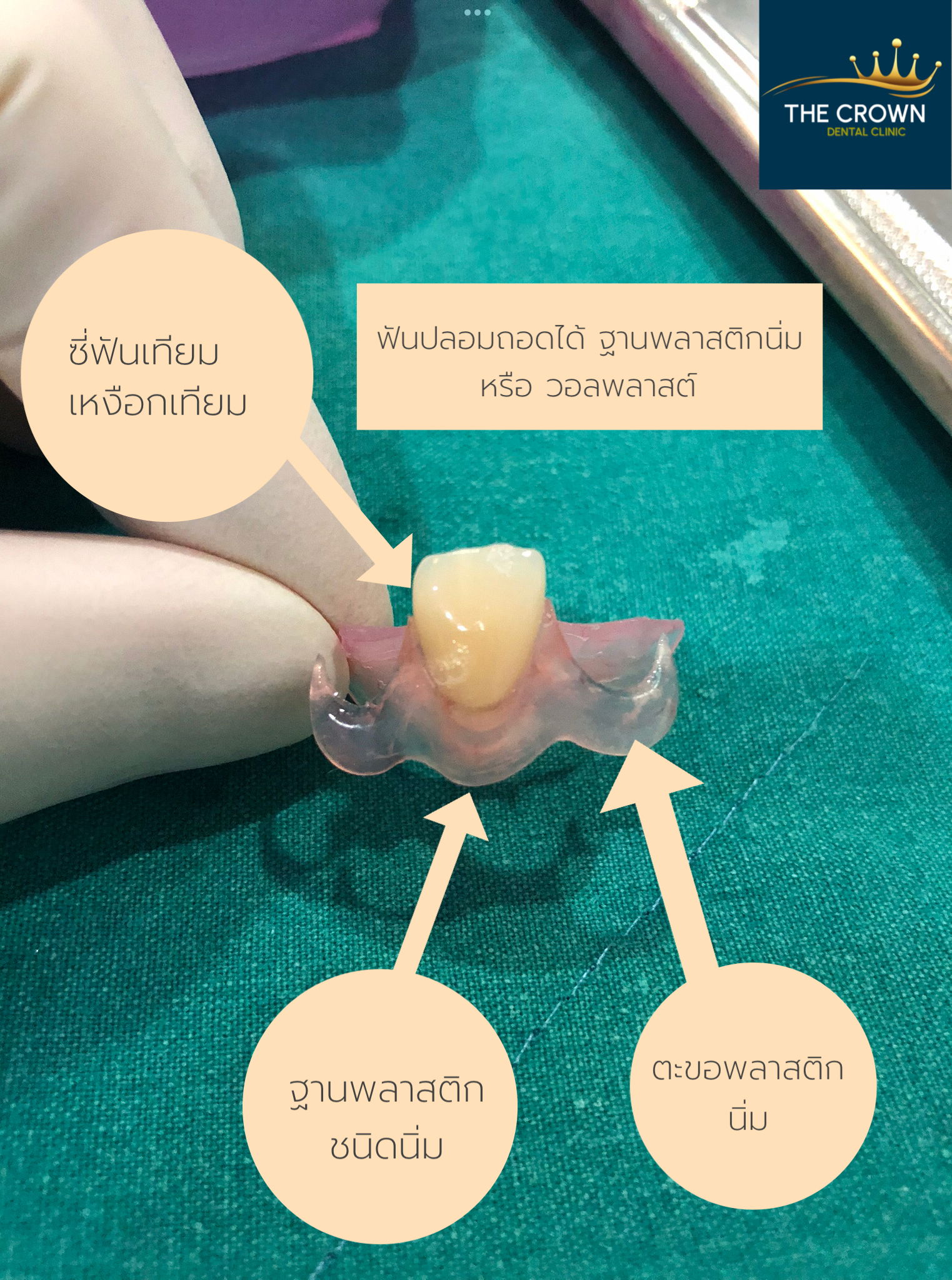
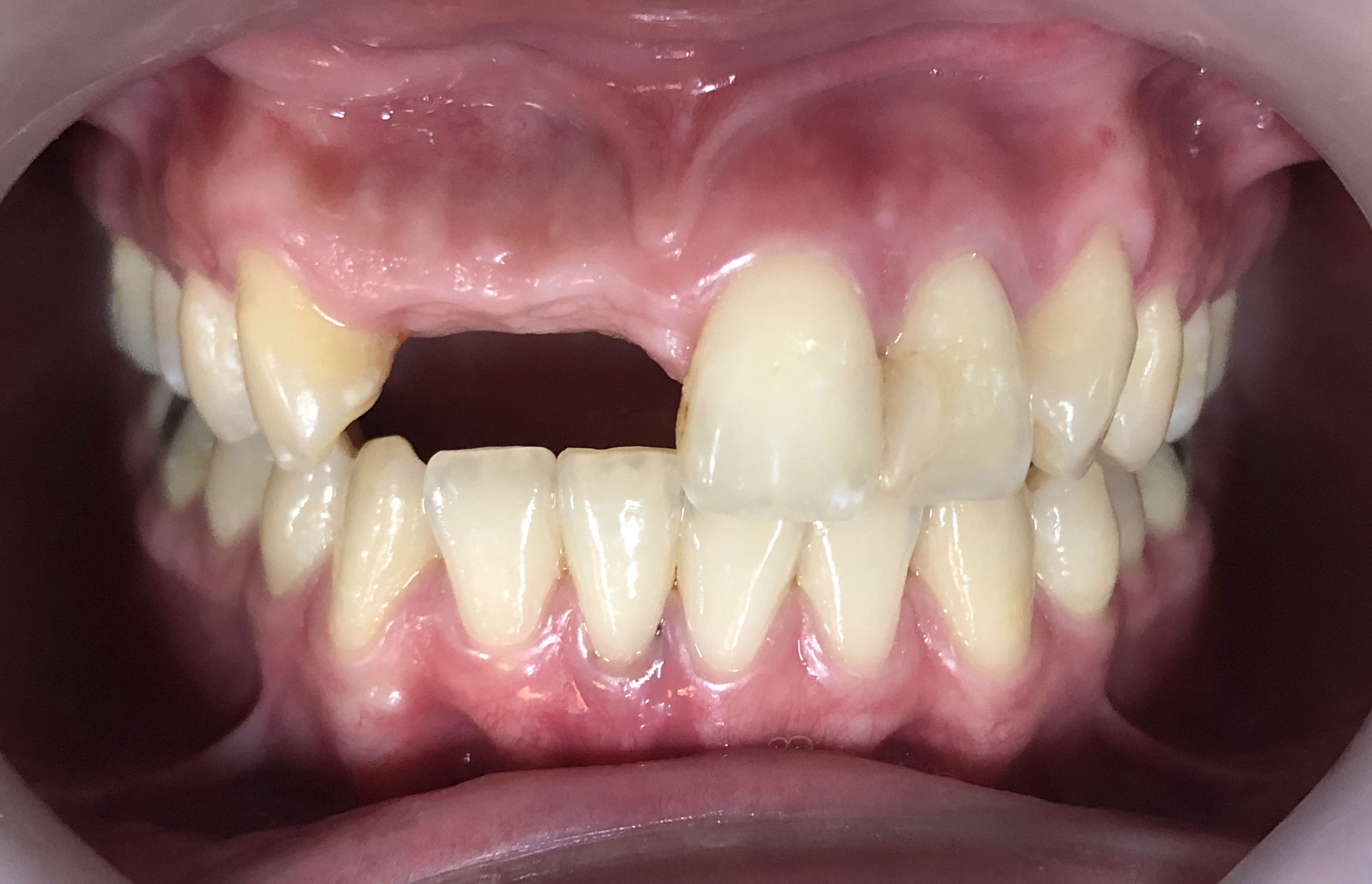
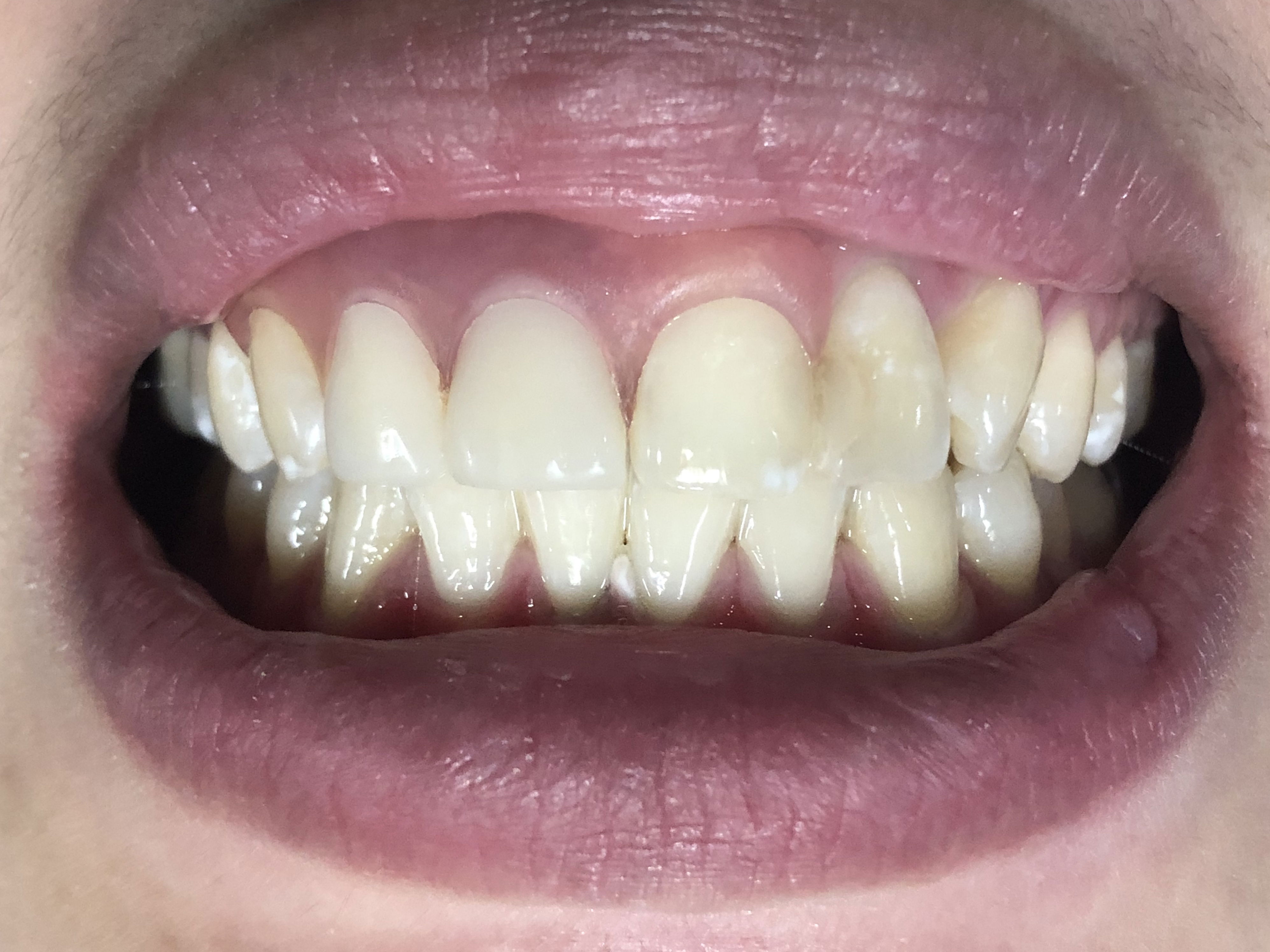
รีวิวเคสตัวอย่าง คนไข้ทดแทนฟันหน้าที่ถอนออกไป จำนวน 2 ซี่ ด้วยฟันปลอมพลาสติกฐานนิ่ม ให้ความสวยงามที่เป็นธรรมชาติ อาศัยส่วนยึดติดที่เป็นตะขอสีเหมือนเหงือก ให้ความเป็นธรรมชาติเมื่อคนไข้ต้องนำไปใช้พูดคุย หรือยิ้ม โดยเฉพาะกรณีที่คนไข้มีระดับการยิ้มที่สูง ทำให้มองเห็นฟันและเหงือกขณะยิ้มได้
When speaking of simple dental prostheses that are easy to fabricate, can be completed in a relatively short time, and are reasonably affordable, removable dentures are usually the first option that comes to mind. There are several types of removable dentures available. In this article, the author will introduce the different types of removable dentures, explain their components, and discuss their advantages, disadvantages, and precautions for use—so that patients can make an informed decision that best suits their needs and lifestyle.
What Are Removable Dentures?
Removable dentures are prostheses that patients can insert and remove by themselves. Their main advantages include ease of cleaning, relatively low cost, simple repair in case of fracture or damage, and acceptable esthetics. They also help replace missing gingiva or bone lost after tooth extraction.However, removable dentures also have disadvantages. These may include a bulky denture base that extends over the palate or alveolar ridge, which can cause discomfort. Some patients experience speech difficulties due to the size of the appliance, a less natural feeling while wearing it, and a longer adaptation period.
Type 1: Hard Acrylic Removable Dentures
This is the most basic type of removable denture. Hard acrylic dentures are relatively easy to fabricate and have a pleasing appearance because there is minimal visible metal. However, they are usually about 2 mm thick to ensure adequate strength. Metal clasps are used to engage the abutment teeth.This type is the most affordable among removable dentures. It is more prone to fracture but can be easily repaired or have additional teeth added if needed. Acrylic material is porous and tends to absorb color and odors from food, making it more susceptible to discoloration and plaque accumulation. As a result, the average lifespan is approximately five years.
Type 2: Metal-Based Removable Dentures
Metal-based removable dentures have a metal framework, including the base, clasps, and rests, all cast as a single piece. The artificial gingiva and denture teeth are still made of acrylic to maintain esthetics. The metal framework is designed to be as thin as possible while maintaining strength and is largely hidden within the mouth.The clasp design and placement are carefully planned by the dentist to ensure optimal fit and retention. This type of denture provides better force distribution during chewing, transferring occlusal forces more effectively to the alveolar ridge.However, metal-based dentures are more expensive, and repairs can be challenging because they require specialized bonding techniques between metal and acrylic. On the positive side, metal frameworks are easier to clean and therefore tend to have a longer lifespan, often exceeding five years. That said, the acrylic gingiva and denture teeth can still wear down or fracture over time. Some patients may also notice the heavier weight of the appliance.
Type 3: Flexible Removable Dentures (Valplast)
The final type commonly selected by dentists is the flexible plastic removable denture, commonly known as Valplast. Personally, the dentist often recommends this option for replacement of anterior teeth, as it is compact, lightweight, and does not have a bulky denture base that interferes with comfort or function.However, the dentist generally does not recommend Valplast for posterior tooth replacement. This is because it lacks proper occlusal rests on the teeth, resulting in poor distribution of chewing forces to the gums. Although the flexible base makes the denture comfortable and easy to wear, it is not ideal for heavy chewing forces.
Sample Case Review
In one example, a patient replaced two extracted anterior teeth with a flexible plastic denture. The result was highly natural-looking, using gingiva-colored clasps that blended seamlessly with the gums. This provided excellent esthetics during speech and smiling—especially important for patients with a high smile line, where both teeth and gums are visible when smiling.
ขอบคุณที่ติดตามอ่านบทความ : คุณหมอกอล์ฟ ทีมเดอะคราวน์