เคลียร์ช่องปากก่อนจัดฟัน ใครคิดว่าไม่สำคัญ (รีวิวเคส)
บทความนี้ขออนุญาตนำเสนอ เคสณ คลินิกทันตกรรมเดอะคราวน์ (ซึ่งได้รับการขออนุญาตจากคนไข้เรียบร้อยแล้ว เนื่องจากมีสภาพของฟันผุค่อนข้างมาก)
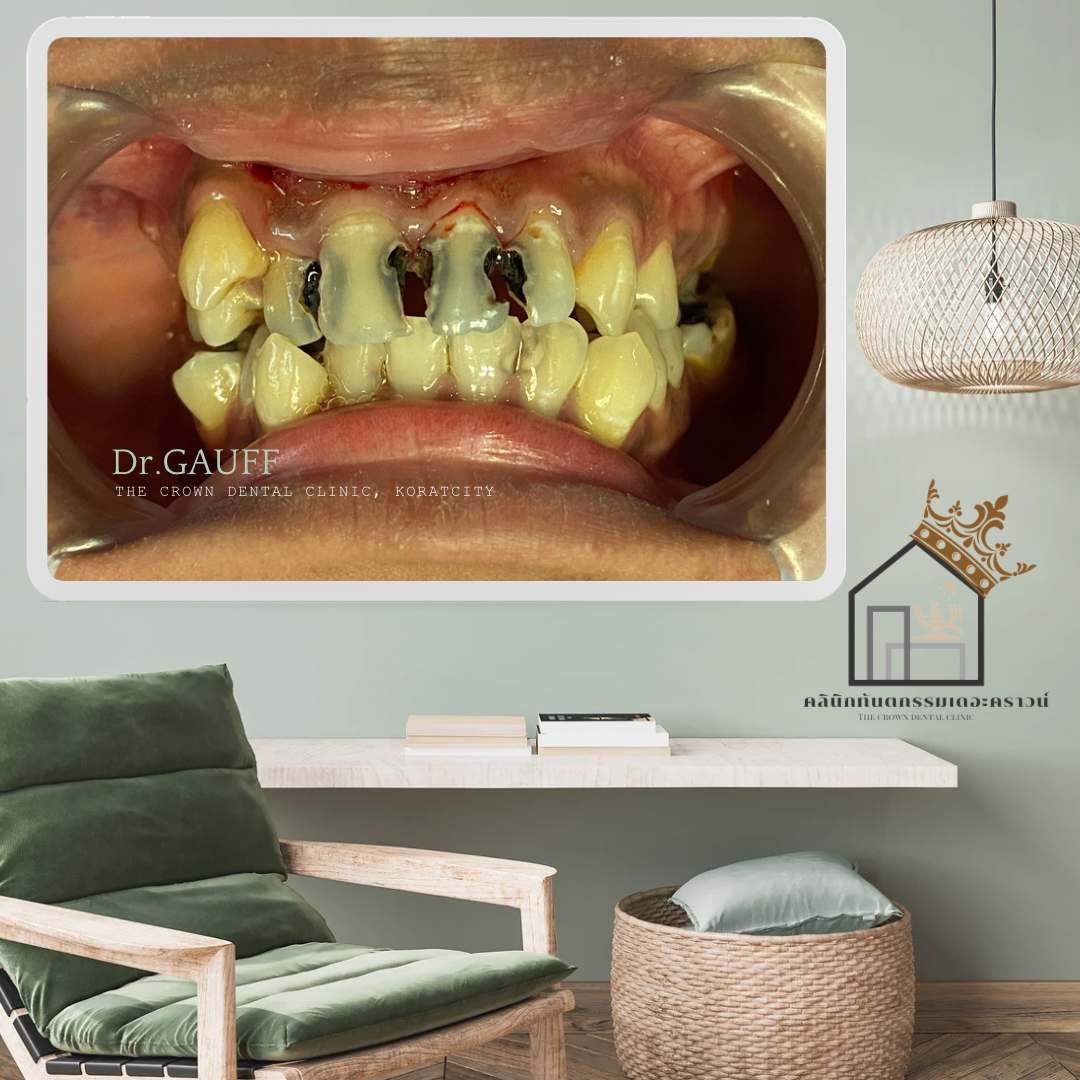
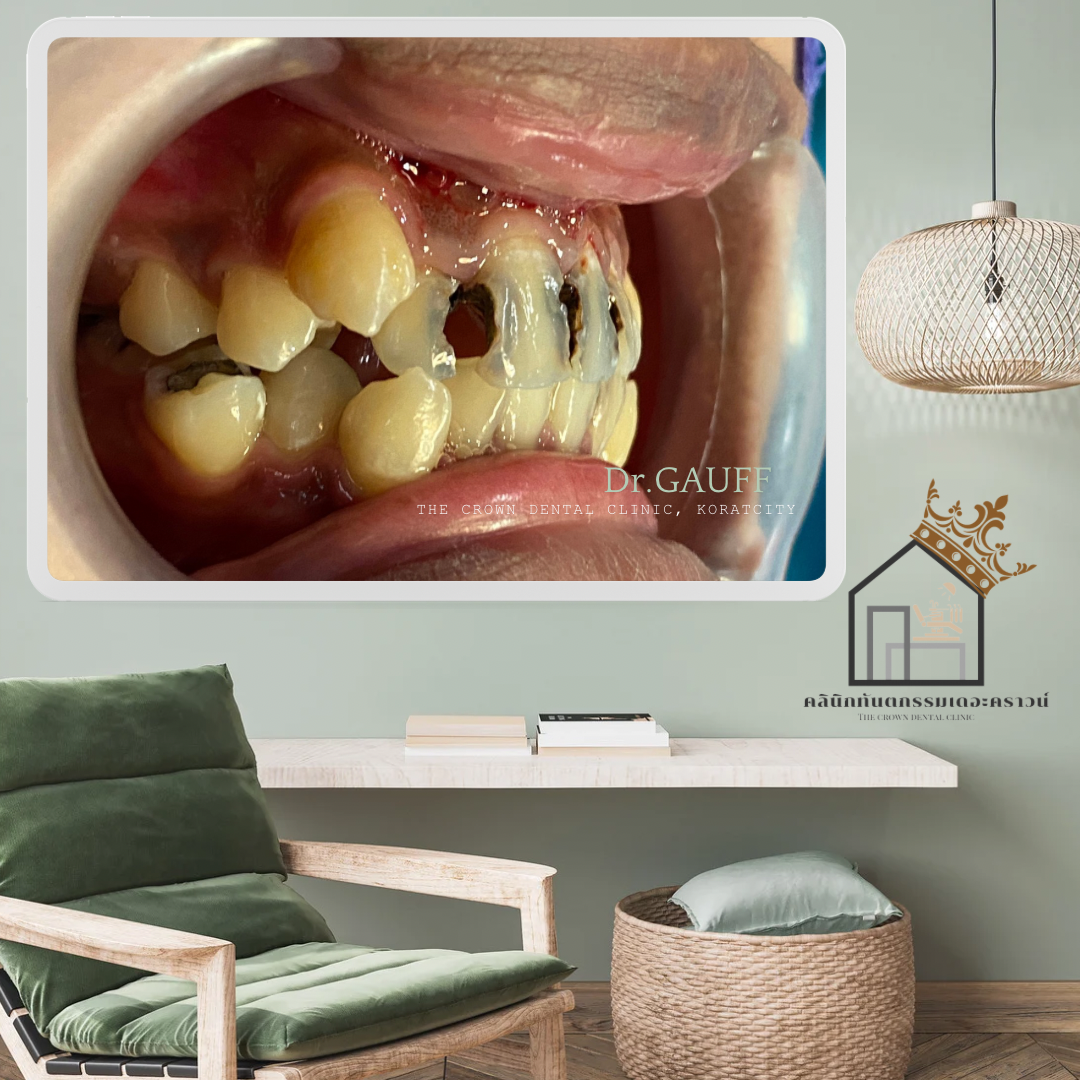
เป็นเคสจัดฟัน โดยประเมินสภาพช่องปากก่อนการจัดฟัน ค่อนข้างมีฟันผุหลายซี่ มีฟันกรามที่ต้องถอน โดยเฉพาะฟันหน้าที่รอยผุลุกลามจนถึงโพรงประสาทฟัน เกิดหนอง ต้องได้รับการรักษารากฟัน มีฟันผุที่ยังสามารถอุดได้ และการควบคุมโรคเหงือกด้วยการขูดหินปูน นอกจากนี้ยังต้องเน้น เรื่องการดูแลสุขภาพช่องปาก เพื่อคงสภาพฟันที่เหลือในช่องปากให้อยู่ได้นานที่สุด
สำหรับแผนการรักษา ก็ต้องเริ่มจากการเคลียร์ช่องปากดังที่ได้กล่าวไป ส่วนแผนของฟันหน้าที่ผ่านการรักษารากฟันมาแล้ว คุณหมอุดแต่งด้วยวัสดุอุดคอมพอสิต (สีธรรมชาติ) ในช่วงการจัดฟัน เพื่อให้ง่ายต่อการ ติดเครื่องมือจัดฟัน ร่วมกับการให้คำแนะนำกับคนไข้เรื่องของการระมัดระวังการใช้งานฟันหน้า และภายหลังการจัดฟันเสร็จสิ้น จึงจะกลับมาบูรณะด้วยครอบฟัน เพื่อปรับปรุงรูปร่าง และสี ของฟันที่คล้ำ ให้มีความเหมาะสมมากยิ่งขึ้น และทดแทนฟันที่ถูกถอนออกไปด้วยฟันปลอมต่อไป
เมื่ออุดฟัน ขูดหินปูน ถอนฟัน และรักษารากฟันเสร็จเรียบร้อย สามารถควบคุมโรคได้ดี คนไข้ได้รับคำแนะนำเรื่องการดูแลสุขภาพช่องปากที่ดี เราก็เข้าสู่ขั้นตอนการจัดฟัน ติดเครื่องมือและเรียงฟัน
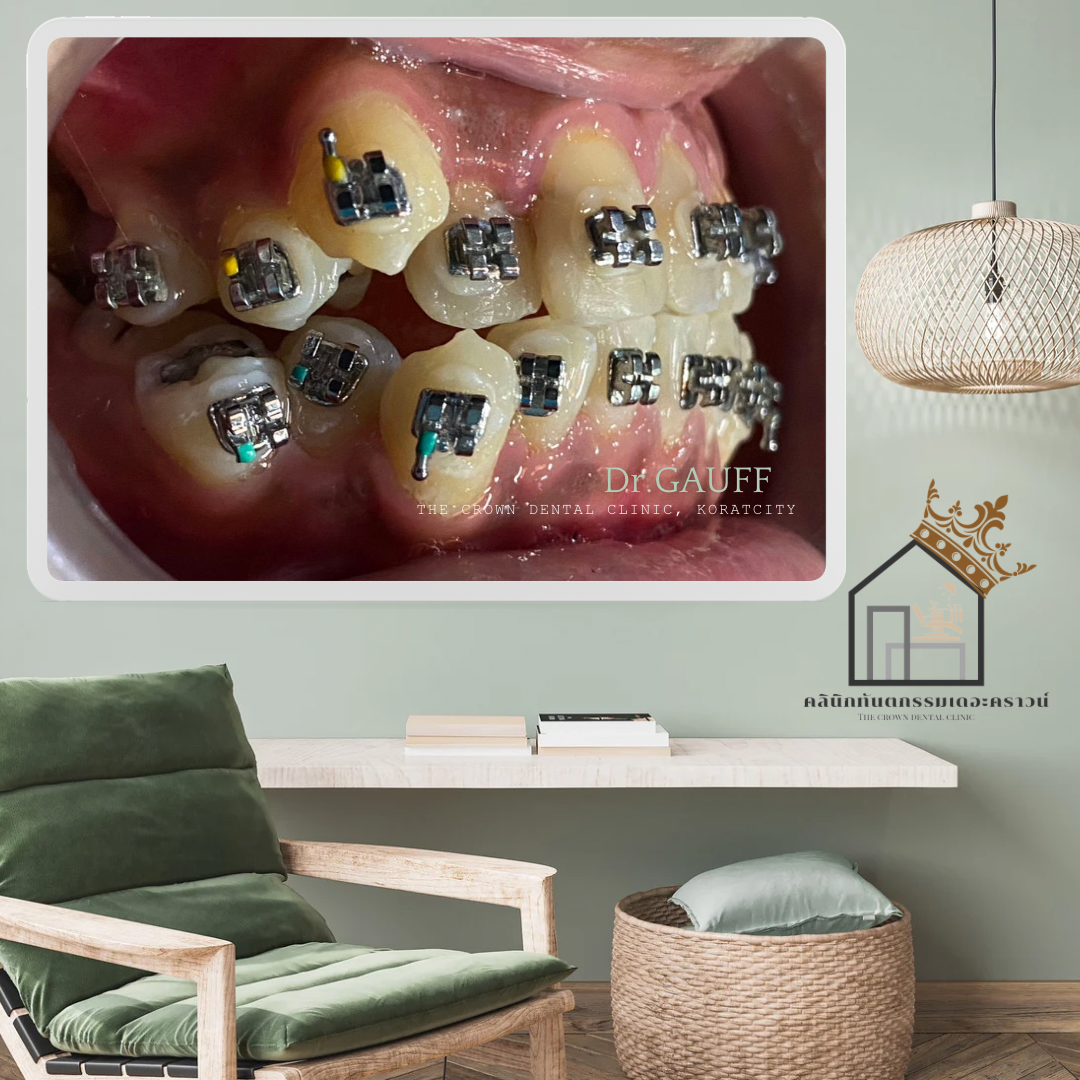
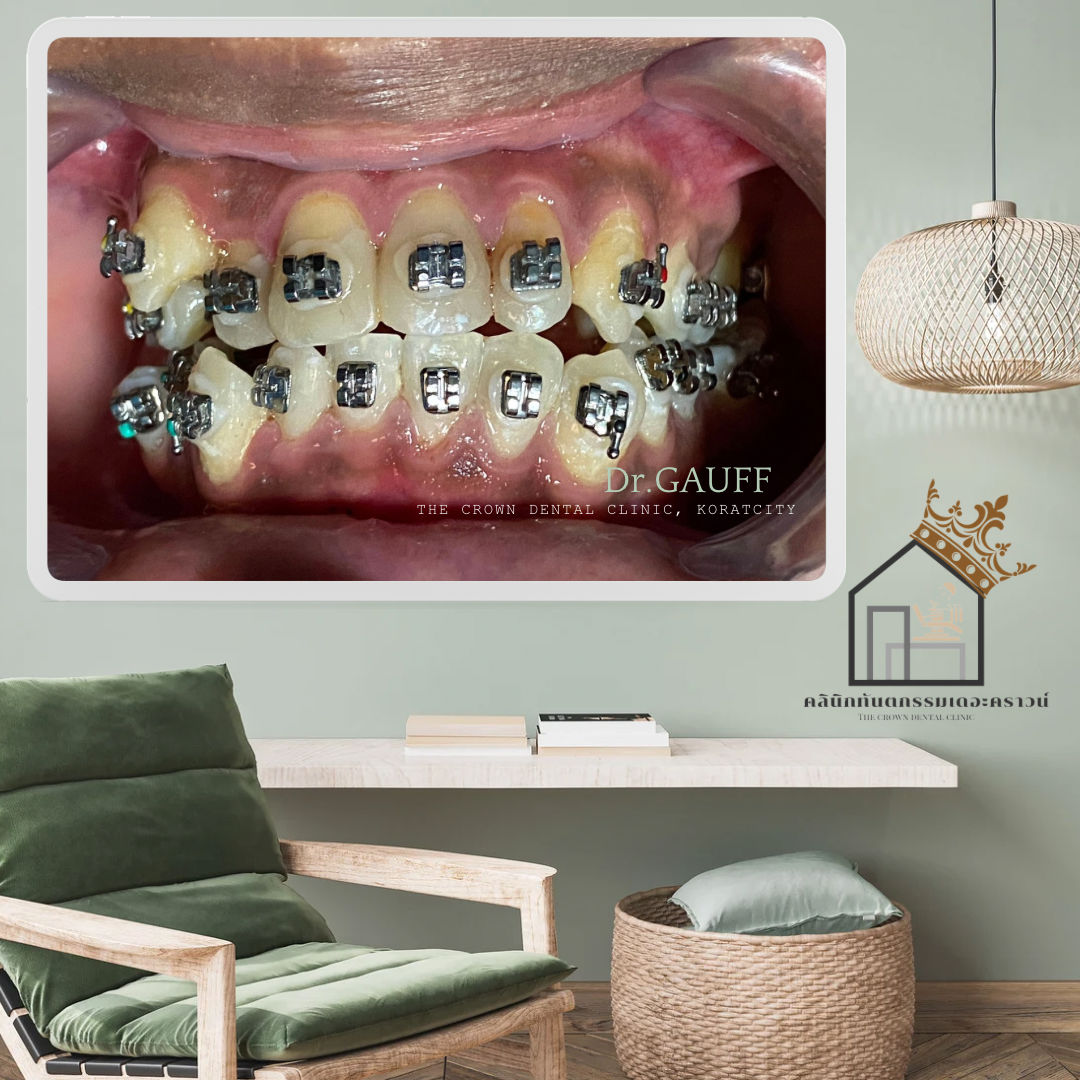
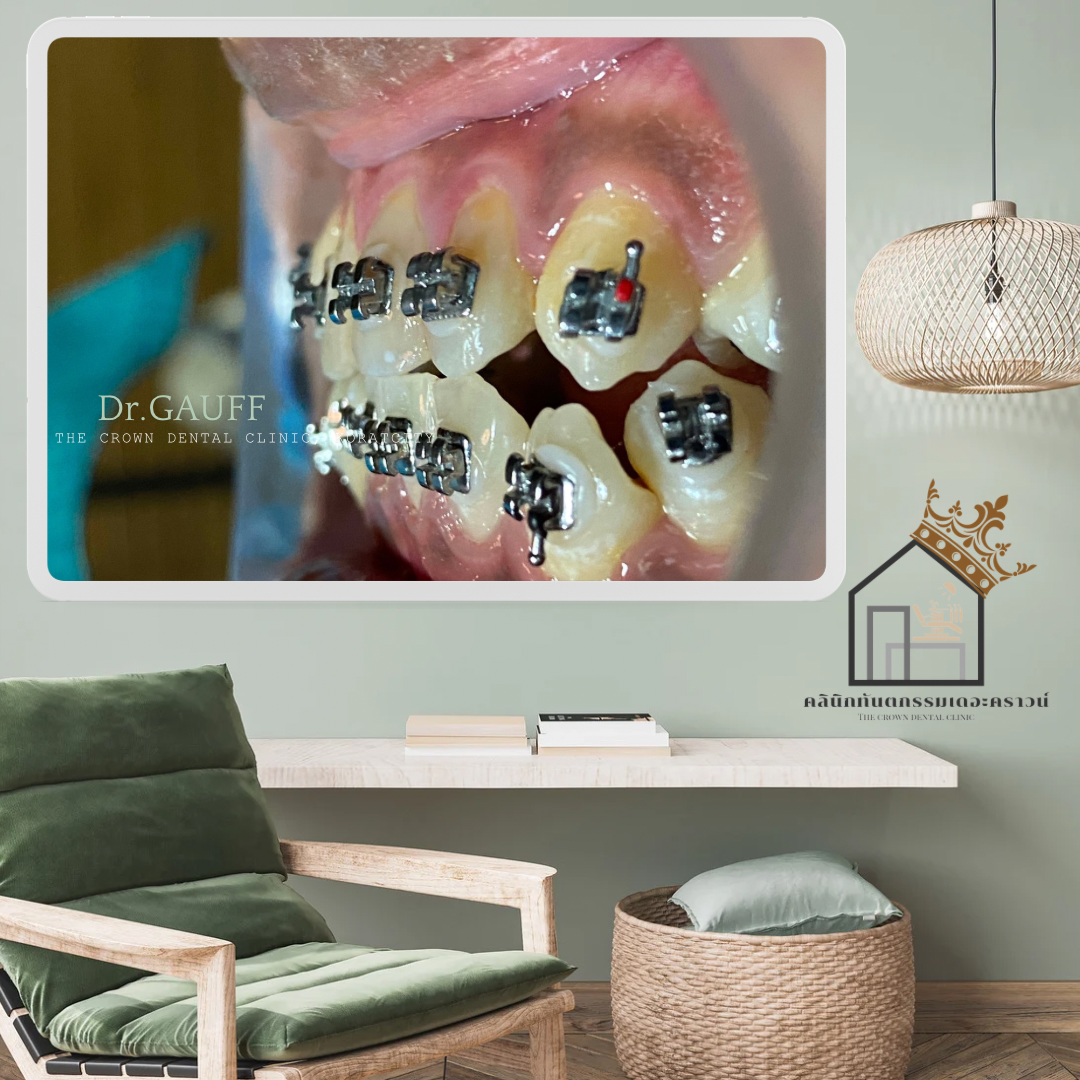
สภาพช่องปากหลังการจัดฟัน ประมาณ 1 ปีเศษ คุณหมอจัดการเรียงตัวของฟันให้คนไข้สามารถสบฟันได้ดีมากขึ้น คนไข้เคี้ยวอาหารได้ดีมากขึ้น ประเมินการเอาใจใส่ในการดูแลสุขภาพช่องปาก ทำได้อย่างดี ไม่มีรอยผุใดๆเพิ่มเติม เหงือกอักเสบเพียงเล็กน้อย ขูดหินปูนระหว่างการจัดฟันสม่ำเสมอ ส่งผลให้การเคลื่อนฟันทำได้อย่างมีประสิทธิภาพ
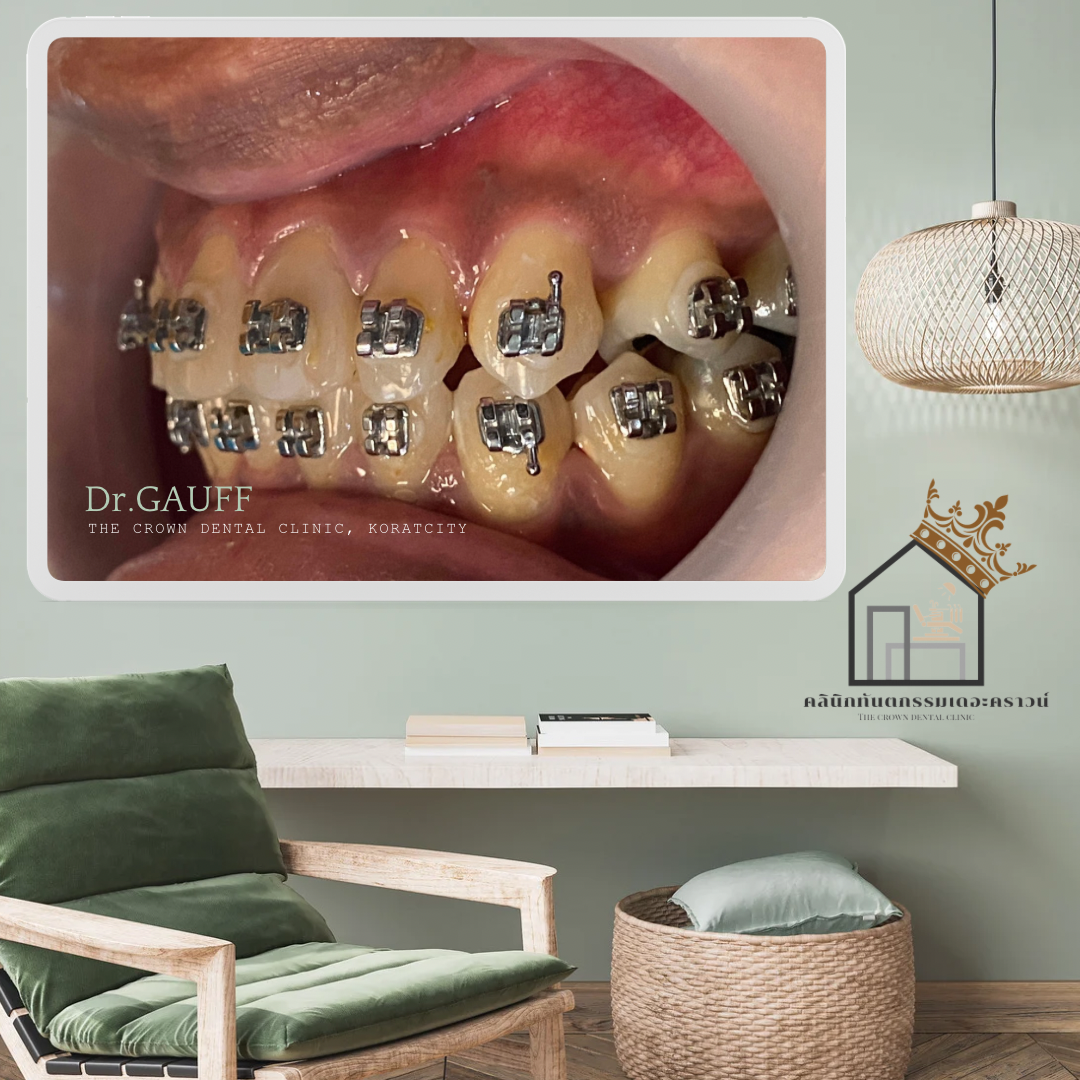
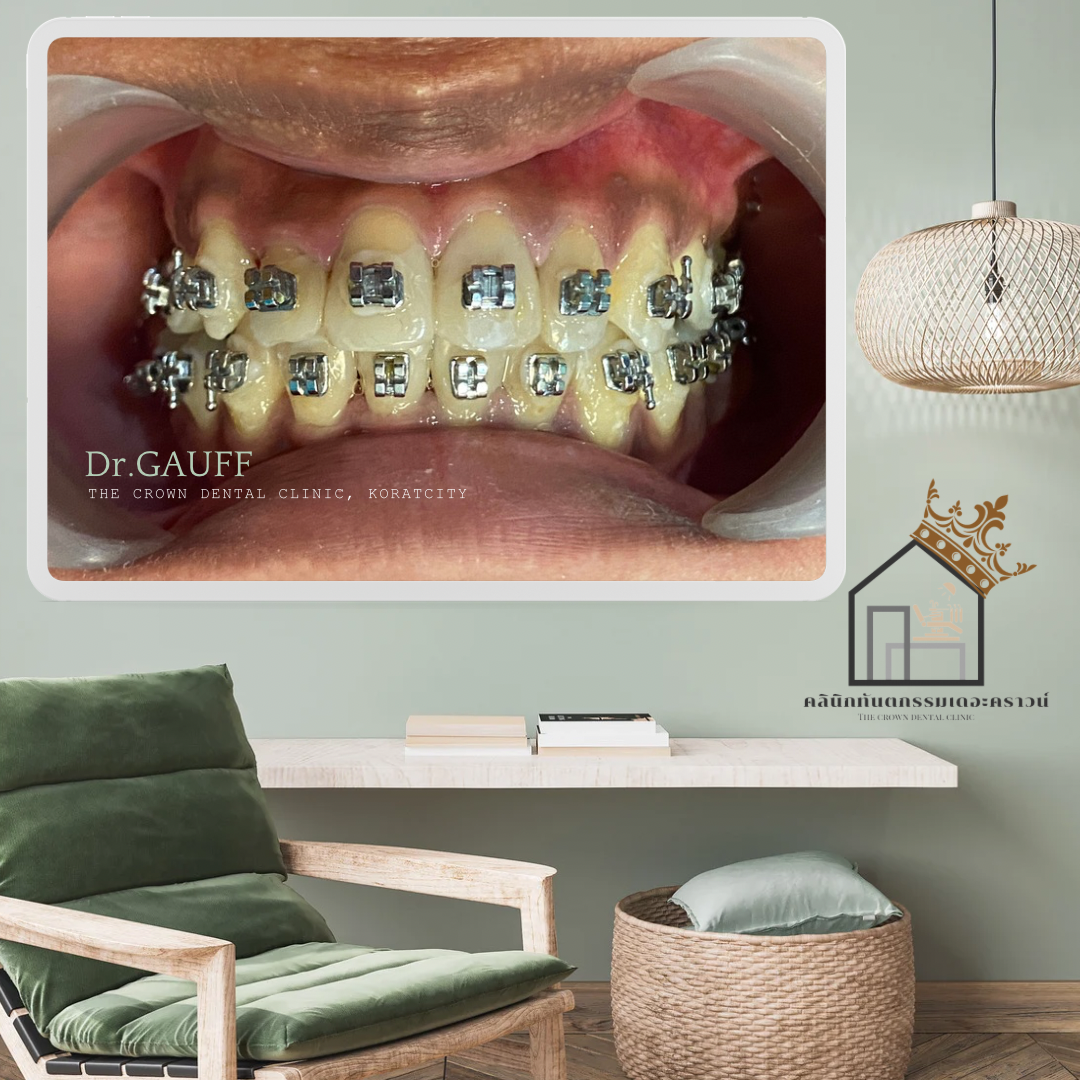
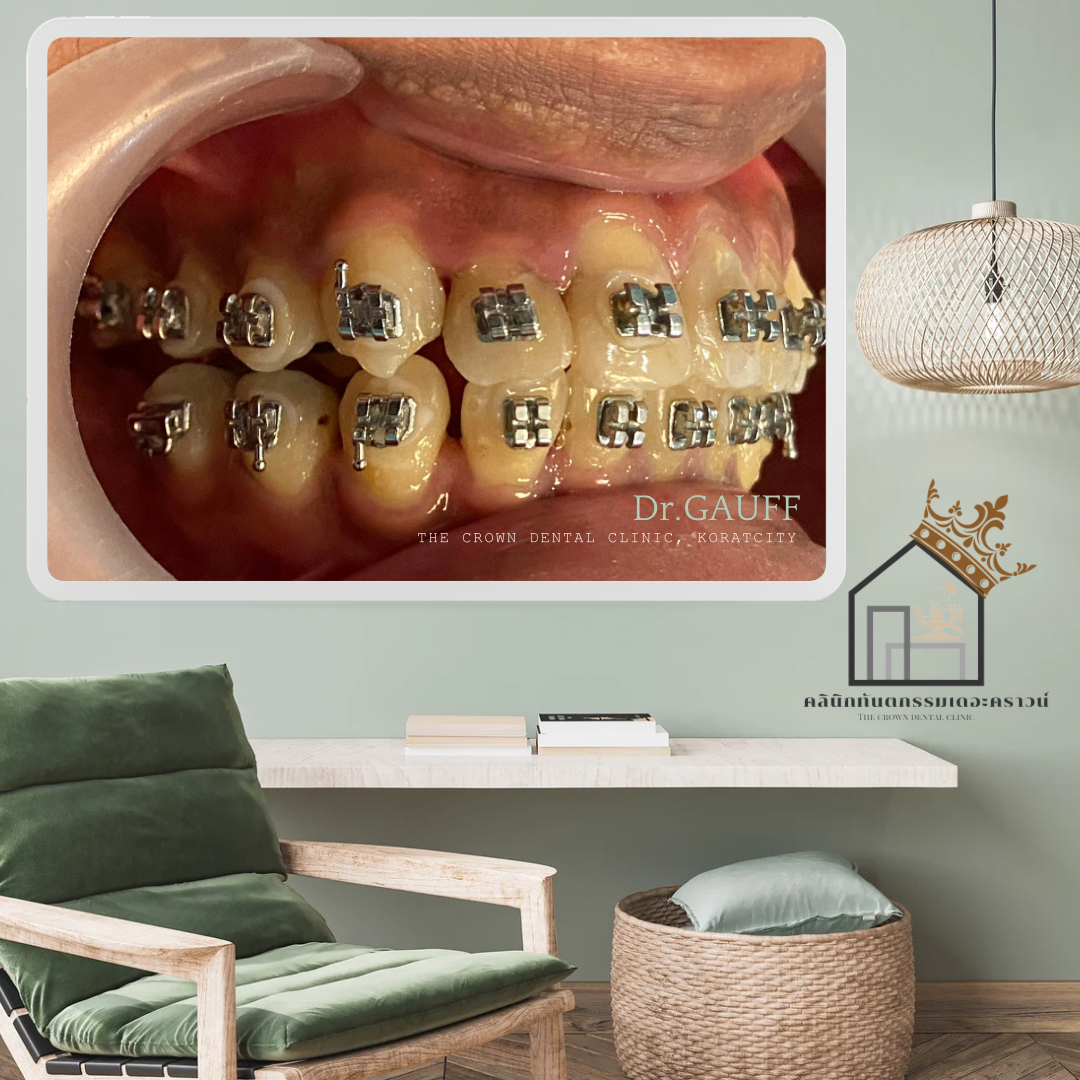
ณ ปัจจุบัน คนไข้รายนี้อยู่ในขั้นตอนของการ ดึงฟันเพื่อปิดช่องว่าง ให้ชิด เมื่อเสร็จสิ้นการรักษา จำเป็นที่จะต้องเข้าสู่ระยะของการฟื้นฟูสภาพช่องปาก ด้วยการใส่ฟันปลอมทดแทนฟันที่ถอนออกไป และการบูรณะฟันหน้าด้วยครอบฟัน เพื่อสร้างความแข็งแรงให้กับเนื้อฟัน แก้ปัญหาฟันคล้ำ และแก้ไขรูปร่างของฟัน ให้มีความเหมาะสม และคงสภาพช่องปากที่ดี ในระยะยาวต่อไป
คนไข้รายนี้ มีความตั้งใจที่จะเริ่มต้นดูแลช่องปากของตนเองอย่างมาก สังเกตได้จากการปฏิบัติตามแผนการรักษา การอุดฟัน การรักษารากฟัน ขูดหินปูนทุก 6 เดือนสม่ำเสมอ ส่งผลให้ภาพรวมของการรักษา ณ ขณะนี้ คุณหมอสามารถควบคุมโรคในช่องปากได้ ไม่มีฟันผุเพิ่มเติม ไม่เกิดปัญหาโรคเหงือก ส่งผลให้การจัดฟันทำได้อย่างรวดเร็ว และได้ ผลลัพท์ที่ดี
หากจะต้องกล่าวโดยสรุปของความสำคัญของการกำจัดและควบคุมโรคในช่องปากก่อนเข้าสู่กระกวนการจัดฟัน มีความสำคัญอย่างมาก เนื่องจากฟันและเหงือกที่มีปัญหารอยโรคต่างๆ จะส่งผลต่อการเคลื่อนฟัน การกระจายของโรคจากจุดหนึ่งไปยังจุดต่างๆภายในช่องปาก ส่งผลเสียต่อการจัดฟัน และความล่าช้าของการรักษาอีกด้วย นอกจากนี้รอยโรคที่ลุกลามไปอย่างมาก ก่อให้เกิดแนวโน้มที่การรักษาจะยุ่งยากมากขึ้น มีค่าใช้จ่ายที่เพิ่มขึ้น และการเคลื่อนที่ของฟันต้องถูกชะลอออกไป เพื่อจัดการรอยโรคเหล่านั้นให้ดีเสียก่อน ดังนั้น การจัดการรอยโรคต่างๆ ควบคุมให้อยู่ในเกณฑ์ที่ดูแลได้ ร่วมกับการเอาใจใส่ดูแลสุขภาพช่องปากของคนไข้ ก็จะยิ่งทำให้ผลสำเร็จของการจัดฟันสูง
Case Presentation – The Crown Dental Clinic
(Published with the patient’s consent, as the case involved extensive dental caries)This article presents an orthodontic case at The Crown Dental Clinic. Pre-orthodontic evaluation revealed multiple carious teeth, including posterior teeth that required extraction. Several anterior teeth had deep caries extending into the pulp, resulting in infection and abscess formation, and therefore required root canal treatment. Other carious teeth were still suitable for restoration, and periodontal disease control was necessary through scaling. Emphasis was also placed on oral hygiene education to preserve the remaining teeth for as long as possible.
Treatment Planning
The treatment plan began with comprehensive oral disease control as outlined above. For the anterior teeth that had already undergone root canal treatment, the dentist placed tooth-colored composite restorations during the orthodontic phase to facilitate bracket bonding. The patient was advised to use caution when biting with the front teeth.
After completion of orthodontic treatment, the plan is to restore the anterior teeth with crowns to improve strength, shape, and color, and to replace extracted teeth with dentures as part of the final rehabilitation.
Orthodontic Phase
Once restorations, scaling, extractions, and root canal treatments were completed—and disease control was achieved—the patient received detailed oral hygiene instructions. Orthodontic treatment then commenced with appliance placement and tooth alignment.
Progress After Approximately One Year
After a little over one year of orthodontic treatment, tooth alignment had improved significantly, allowing for better occlusion and more efficient chewing. The patient demonstrated excellent oral hygiene compliance: no new caries were detected, gingival inflammation was minimal, and regular scaling during orthodontic treatment supported efficient tooth movement.
Current Status and Next Steps
At present, the patient is in the space-closure phase, drawing teeth together to close remaining gaps. Upon completion of orthodontic treatment, the patient will enter the rehabilitative phase, which includes:
- Dentures to replace extracted teeth
- Crown restorations for anterior teeth to enhance strength, correct discoloration, and optimize tooth shape
These steps aim to establish a stable, healthy, and functional oral condition for the long term.
Patient Compliance and Clinical Outcome
This patient has shown a strong commitment to oral health, evidenced by strict adherence to the treatment plan, timely restorations, completion of root canal therapy, and routine scaling every six months. As a result, oral disease has been well controlled—no new caries and no periodontal complications—allowing orthodontic treatment to proceed efficiently and achieve favorable outcomes.
Key Takeaway
Effective elimination and control of oral disease before orthodontic treatment are critical. Teeth and gums affected by active disease can compromise tooth movement, facilitate disease spread within the mouth, delay treatment, and increase complexity and cost. Advanced lesions often require treatment pauses to resolve pathology before orthodontics can continue.Therefore, comprehensive disease control, combined with patient commitment to oral hygiene, markedly improves orthodontic success, shortens treatment time, and supports long-term oral health.
ขอบคุณที่ติดตามอ่านบทความ : คุณหมอกอล์ฟ คลินิกทันตกรรมเดอะคราวน์โคราช